Smartphones have changed how people listen to music, watch video, take calls, play games, and work on the move. At the same time, personal audio has become a little more complicated.
The headphone jack is missing from many newer phones, so USB-C has become the main wired connection for a lot of mobile users. Wireless earbuds are everywhere, and still, wired audio has not disappeared.
Some people keep using wired IEMs because they want lower latency. Others want stable monitoring, fewer battery worries, or a listening chain that behaves the same way every time. For them, the mobile setup often looks simple:
phone → USB-C adapter or portable DAC → wired IEMs
That simplicity is part of the appeal. But there is one part of the chain that is easy to overlook: the cable. A good pair of IEMs can last for years, while their cable may be the first part to bend, loosen, become noisy, or fail.
Why wired audio still matters on mobile devices
Wireless audio is convenient. It is easy to use, easy to carry, and good enough for many daily situations. For commuting, casual playlists, calls, and workouts, it often makes perfect sense.
Wired audio solves a different set of problems. It does not need charging. It does not depend on Bluetooth pairing. It usually has lower latency. It can also be useful when a listener wants the same connection behavior every time they plug in.
That matters for mobile gaming, video editing, music practice, long listening sessions, and certain work setups. Even for ordinary listening, some people simply prefer the predictability of a cable and a small USB-C audio adapter.
Of course, wired audio is not automatically better for everyone, but it is often better suited to situations where consistency matters more than convenience.
The basic USB-C audio chain
A modern mobile wired setup usually starts with USB-C. From there, users have two common options.
The first is a basic USB-C to 3.5mm adapter. This is enough for many people, especially if they use efficient IEMs and only need a simple way to connect wired earphones.
The second is a portable DAC or dongle. This device converts digital audio to analog and may offer more stable output, better volume control, or balanced outputs such as 4.4mm, depending on the model.
Then comes the IEM cable. It may look like the simplest part of the chain, but it handles most of the movement. The phone moves. The adapter moves. The cable bends in a pocket, rubs against clothing, sits on a desk, or gets wrapped after use.
If the cable is stiff, noisy, loose, or damaged, the whole mobile setup feels less stable.
That is why mobile users should check cable reliability before assuming the earphones themselves are the problem.
Where IEM cables usually fail
IEM cables tend to fail in predictable places.
The plug is one of them. If a phone or dongle stays in a pocket, bag, or desk corner, the cable can bend near the plug many times a day. Over time, that stress can weaken the internal conductors and cause crackling or channel dropouts.
The connector near the IEM shell is another weak point. This area moves every time the user turns their head, removes the earphones, wraps the cable, or stores the IEMs in a case. If the connector becomes loose, the sound may cut out when the cable moves.
The cable jacket also matters. A cable can become stiff, kinked, sticky, or noisy with age and use. When it rubs against clothing or a desk, vibration can travel into the earphones. This is called microphonics, and it can be distracting during quiet listening, calls, or focused work.
These problems do not always mean the IEM drivers are damaged. In many cases, the cable is simply the part that has taken the most physical stress. If the IEMs have a detachable cable, replacement is often the most practical next step before assuming the earphones themselves are finished.
2-pin, MMCX, and compatibility basics
Before buying any replacement cable, users need to identify the connector type.
Many IEMs use 0.78mm 2-pin connectors. These have two small pins that insert into the IEM shell. A good 2-pin fit can feel stable and secure, but the pins need to be aligned carefully.
Other IEMs use MMCX connectors. MMCX is a circular snap-on connector that can rotate. Some users like the extra movement around the ear, but worn MMCX connectors may become loose or inconsistent over time.
The two systems are not interchangeable. A 2-pin IEM needs a 2-pin cable, and an MMCX IEM needs an MMCX cable. Users should also check whether their IEMs use recessed sockets or brand-specific variations.
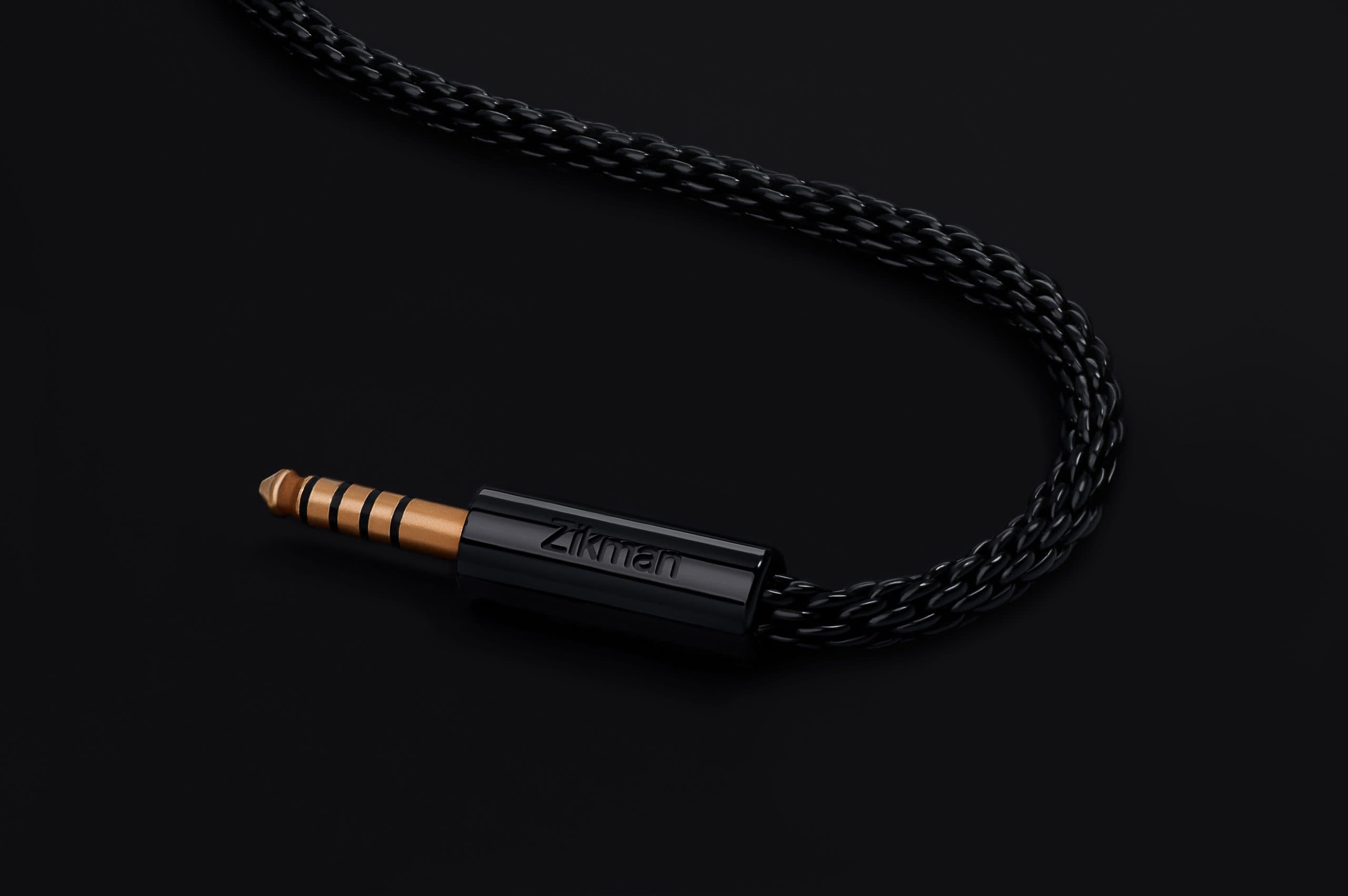
Plug type is just as important. A cable may end in 3.5mm, 2.5mm balanced, or 4.4mm balanced. The plug must match the phone adapter, portable DAC, or audio source.
Choosing a cable for daily mobile use
Mobile use creates different stress than desktop use. A cable used with a phone is more likely to be wrapped, carried, pulled, bent, and used in different places.
For daily mobile use, four details matter most:
- Length. A cable that is too long may snag on clothing, bags, or desk edges. A cable that is too short may pull on the ears or adapter.
- Flexibility. A softer cable can be easier to manage during long listening sessions and may reduce handling noise.
- Strain relief. Good strain relief near the plug, Y-split, and connector helps protect the parts that bend most often.
- Connector stability. If someone moves a lot, commutes, or plays games on a phone, a secure connector becomes more important than it may seem at first.
Before replacing the earphones themselves, mobile users can compare different IEM cable options based on connector type, plug, length, and daily comfort.
When replacement is better than buying new earphones
It is easy to assume that a faulty listening setup means the earphones are failing. Sometimes that is true. But if the sound changes when the cable moves, the issue may be much simpler.
A replacement cable may make sense when:
- one channel cuts out during movement;
- the plug crackles;
- the cable has become stiff or visibly damaged;
- the connector feels loose;
- cable noise has become more noticeable;
- the IEMs still fit and sound right, but the cable feels unreliable.
In these cases, replacing the cable can be less wasteful and more practical than replacing the whole pair of IEMs.
Keep sound expectations realistic
Cable discussions can easily drift into overpromising. A cable will not turn an average pair of IEMs into a completely different product. The largest sound differences still come from the IEM tuning, fit, ear tips, source, and recording quality.
That does not make the cable irrelevant. It just means the most noticeable benefits are often practical.
Stable contact prevents dropouts. A flexible jacket can improve comfort. Lower microphonics can reduce distraction. The correct plug can make the source easier to use. A good cable does not need to promise dramatic changes to be useful.
For mobile users, reliability and comfort are often the real upgrade.
Final thoughts
USB-C audio has made wired mobile listening more modular. A user may have a phone, a small adapter, a portable DAC, and a pair of IEMs. Each part matters, but the cable is the part that handles most of the physical movement.
When everything works, wired IEMs can feel simple and predictable. When the cable starts failing, the whole chain feels fragile.
Before replacing the earphones, it is worth checking the cable first: connector type, plug, length, flexibility, strain relief, and daily handling. In many cases, that is the simplest way to make a mobile wired setup feel stable again.


Share Your Views: